 Wine Tasting Firenze
The Best Time for Wine Tasting Near Florence
Last reviewed August 2026
The best time to visit the Chianti wine region is the second half of September, when the vendemmia is running and the festivals fill the hill towns, followed closely by May, June and October. That is the short answer; the useful part is what each month changes about a tasting, from the 32-degree afternoons of August to the empty cellars of February. Harvest dates come from the Consorzio Vino Chianti Classico and temperatures from the 1991 to 2020 Florence normals. The tastings themselves are compared on our Florence wine tasting guide.
Quick answer Harvest, heat and the quiet months, and which one is actually best for tasting
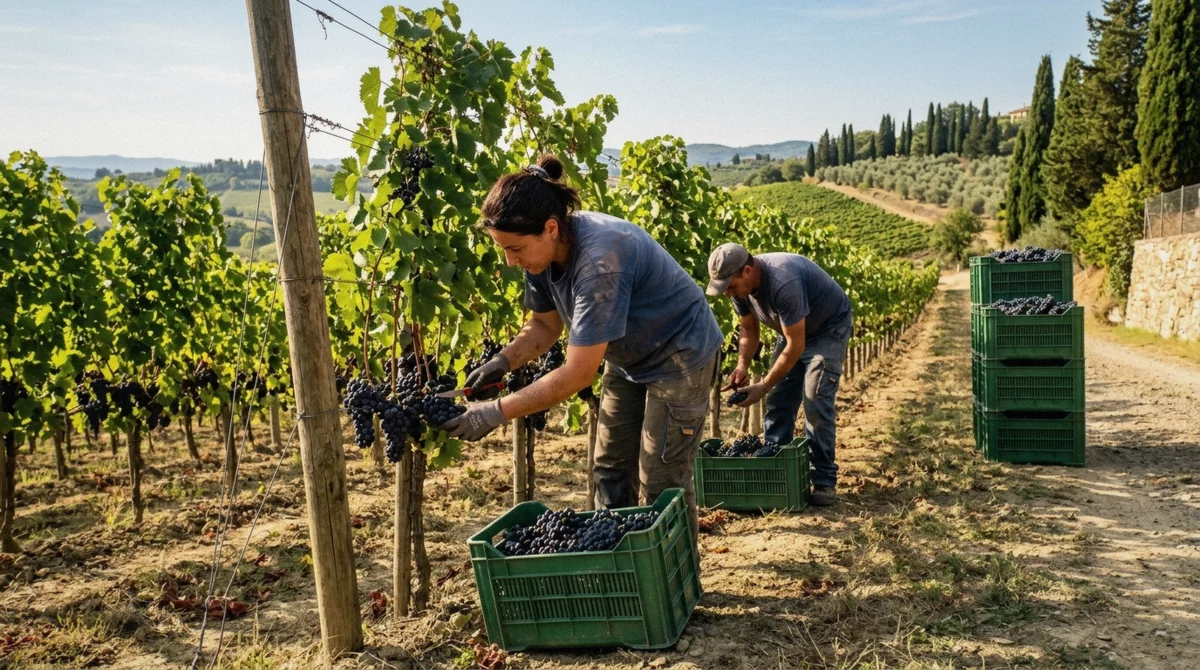
September and early October are the best weeks for wine tasting around Florence: the vendemmia is under way, the estates are working rather than performing, and the festivals cluster in the same three weeks. May and June are the close second, with vines in leaf and comfortable afternoons. July and August average 32 degrees, which the city cellars handle far better than a coach does, and from November to March the countryside empties while the enoteche inside Florence come into their own.
Key takeaways
- Harvest in Chianti Classico runs from the first half of September to the second half of October, depending on altitude
- The wine calendar clusters in September: Chianti Classico Expo in Greve, Wine to Wine in Panzano, Festa dell'Uva at Impruneta
- July and August average 32 degrees, so favour an in-city tasting or a sunset departure
- Winter is the season for Florence's enoteche and wine windows, not for a half-day in the hills
- Harvest weeks sell out first, and free cancellation up to 24 hours makes an early booking painless
- Every listing and its hours sit on the wine tasting in Florence comparison
Month by Month in the Chianti Hills
What each part of the year gives you
Temperatures are the 1991 to 2020 averages for Florence Airport, which run a degree or two warmer than the hills. The wine column is what is actually happening in the vineyard and the cellar, which is what changes the visit.
| Months | Average high | In the vineyard | What it means for a tasting |
|---|---|---|---|
| December to February | 11 to 13 degrees | Pruning, wine resting in barrel | Quiet cellars and full attention; some estates cut their opening days |
| March and April | 16 to 20 degrees | Bud break, first green in the rows | Fewest visitors of the warm half-year; the light is good and nothing is crowded |
| May and June | 24 to 29 degrees | Flowering, then fruit set | The postcard months: green rows, long afternoons, everything open |
| July and August | 32 degrees | Ripening, cellars closed against the heat | Beautiful and hot; take an evening or a city tasting over a midday coach |
| September | 27 degrees | Vendemmia begins across most of Chianti | The best three weeks of the year, and the busiest |
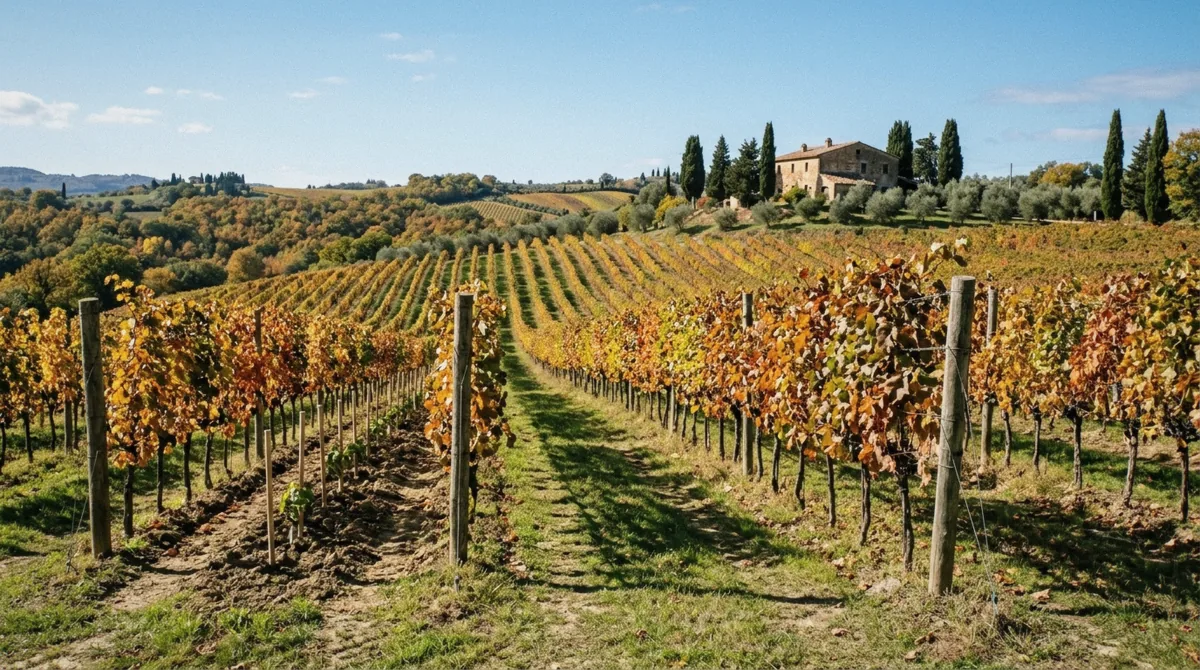
| October | 22 degrees | Harvest finishes at altitude, fermentation runs | Working cellars, autumn colour in the rows, fewer coaches than September |
| November | 16 degrees | New wine settling, olive harvest | Olive oil is at its freshest; the countryside is emptying out |
The short version
If you can choose freely, come in the second half of September: the harvest is visible, the estates smell of fermenting fruit, and the festivals are on. If you want the same countryside without the crowd, take May or early October instead. If you are already booked for August, do not force a midday coach day on yourself.
The city answers better in that month, and the sunset trip answers better than either.
The Vendemmia, and What It Actually Looks Like
The Consorzio Vino Chianti Classico puts the harvest between the first half of September and the second half of October, and the spread is altitude rather than fashion: the lower, warmer vineyards come in first, the high ones at Radda and Lamole can still be picking when October is well under way.
What that means for a visitor is worth stating plainly, because harvest is oversold. You will not be picking grapes on a group tour. What you will see is a working estate: tractors moving fruit, the smell of fermentation everywhere on the property, staff who are busy, and cellars where something is happening rather than being explained. Some estates restrict cellar access precisely because the equipment is in use.
That trade is worth taking. A tasting in a working winery in late September has an atmosphere no February visit can produce, and the harvest is also when the festivals fill the hill towns.
The Consorzio's own 2025 vintage report, published in March 2026, describes a balanced season without drawn-out heatwaves and names freshness as the vintage's signature. That is the wine you will be offered as the new Annata in the seasons ahead, and it is the sort of detail worth asking about at the table.
What to Do About July and August
August is the month people actually travel and the month the hills handle worst, so it deserves a straight answer rather than a shrug.
The heat is real: Florence averages 32 degrees in both July and August, and the Chianti roads are exposed for most of their length. The tastings themselves are fine, because cellars are cool by design and often startlingly so. The problem is everything around them: the transfer, the free time in the rows, the walk from the drop-off, and any hill town with a paved square and no shade.
Three things fix the month. Take an afternoon or sunset departure rather than a morning one, so the outdoor parts happen as the light goes. Choose a listing with air conditioning you will actually sit in, which is the honest advantage of a coach over an open Vespa in August. Or stay in the city, where a vaulted cellar is the coolest room you will enter all day and the whole thing takes an hour.
One more August detail: many Italian businesses close for part of the month, particularly around Ferragosto on 15 August. Estate visits booked through a platform run regardless, but the independent version of the day, with its enoteche and family cellars, is exactly the one that runs into shuttered doors.
The Quiet Half of the Year
November to March, honestly assessed
Nobody sells a winter wine tour, which is precisely why it is worth describing. The vines are bare, the light is short and some estates reduce their opening days. What you get in exchange is undivided attention, no queues at the cellar door and prices that do not spike.
This is also when Florence itself is at its best for wine. The enoteche have room, the wine windows serve to nobody but locals, and an hour in a cellar under the Mercato Centrale is a warm and unhurried thing to do at five in the afternoon.
| If you are in Florence in... | Do this | Not this |
|---|---|---|
| November | An enoteca tasting and the new olive oil, which is pressed now | A long day trip into a bare landscape |
| December or January | A seated cellar tasting in the city | A morning coach in the cold and dark |
| February | A quiet estate visit if you are set on Chianti; call ahead about opening days | Assuming every winery is open as usual |
| March | The first green in the rows and empty roads | Waiting for April, which costs you the quiet |
The September Wine Calendar
Five dates worth planning around
The wine events near Florence cluster in three weeks, and all of them are easier to reach than they look. Dates repeat annually in the same window; confirm the current year with the organisers before booking travel around one.
| When | What | Where | Worth a detour for |
|---|---|---|---|
| Early September | Chianti Classico Expo | Piazza Matteotti, Greve in Chianti | Producer stands in the market square; the 365 bus stops nearby |
| Second weekend of September | Wine to Wine | Panzano in Chianti | A historic growers' festival in one of the eleven named zones |
| Last Sunday of September | Festa dell'Uva | Impruneta | Grape-themed carts paraded by the town's four districts |
| Last Saturday of September | Il Carro Matto | Piazza del Duomo, Florence | An ox-drawn cart of flasks retracing the wine road from Rufina, in the city itself |
| End of September | Bacco Artigiano | Rufina | Tastings and shows in the village the Carro Matto sets out from |
Using them without ruining the trip
Two of these are in Florence or a short bus ride away, which makes them the easiest wine events in Tuscany to attend without a car. Il Carro Matto is the one to catch if you are in the city at the end of September: it costs nothing, it happens on Piazza del Duomo and it is a genuine historical re-enactment rather than a staged photo opportunity.
What they also do is fill the hills. A guided half-day on a festival weekend is slower, the towns are busier, and the estates near the events see more traffic. That is a fair price for the atmosphere, but it is worth knowing in advance rather than discovering on the road.
Which Month Suits Your Trip
If You want the harvest and do not mind company
The second half of September, and book early: the small-group trips fill first
If You want the countryside at its greenest
May or June, when the rows are in leaf and afternoons are still comfortable
If You are travelling in July or August
Take a sunset departure or stay in the city; 32 degrees on a coach is nobody's good day
If You are in Florence in winter
Skip the hills and drink in town: the enoteche and wine windows are at their best with nobody in them
If You want the harvest without the crowds
Early October, when the high vineyards are still picking and the September coaches have gone
Timing Questions Travellers Ask
What is the best month to visit the Chianti wine region?
September, for the vendemmia and the festivals, with the second half of the month the strongest. May, June and October are close behind, and July and August are the two to avoid for a full day on a coach.
When is the grape harvest in Chianti?
The Consorzio Vino Chianti Classico puts it between the first half of September and the second half of October, with the timing set by each vineyard's position and altitude rather than a fixed date.
Can I pick grapes on a wine tour from Florence?
Not on the group tours compared here. Harvest is a working period at the estates, and some restrict cellar access while equipment is running. What you get instead is a winery in motion rather than on display.
Is it worth doing a wine tour in winter?
The cellars are quiet and the attention is undivided, which suits a serious taster, but several estates cut their opening days and the countryside looks bare. In December and January the city tastings are the better use of a short trip.
How hot does it get on a summer wine tour?
Florence averages 32 degrees in July and August, and the hills are only a little cooler. Tastings happen in cool cellars, but the transfers, the free time and any walk through the rows do not.
How far ahead should I book for the harvest weeks?
Earlier than you think for the small-group vehicles and the 4WD safari, which have the fewest seats. Every listing carries free cancellation up to 24 hours before the start, so an early booking risks nothing.
Pick the month for what is happening in the vineyard, not for the weather forecast. A working cellar in late September teaches more in an hour than a spotless one in June, and a February tasting with the owner's full attention beats a crowded August afternoon. The only month that genuinely fights you is August, and Florence has a cool cellar answer for that one.